The best wood and materials for furniture in Bali's climate
Bali's humidity, salt air and termites destroy the wrong materials quickly. Here is a straightforward guide to what works in the tropics — and what to avoid.
Updated:
Solid hardwoods
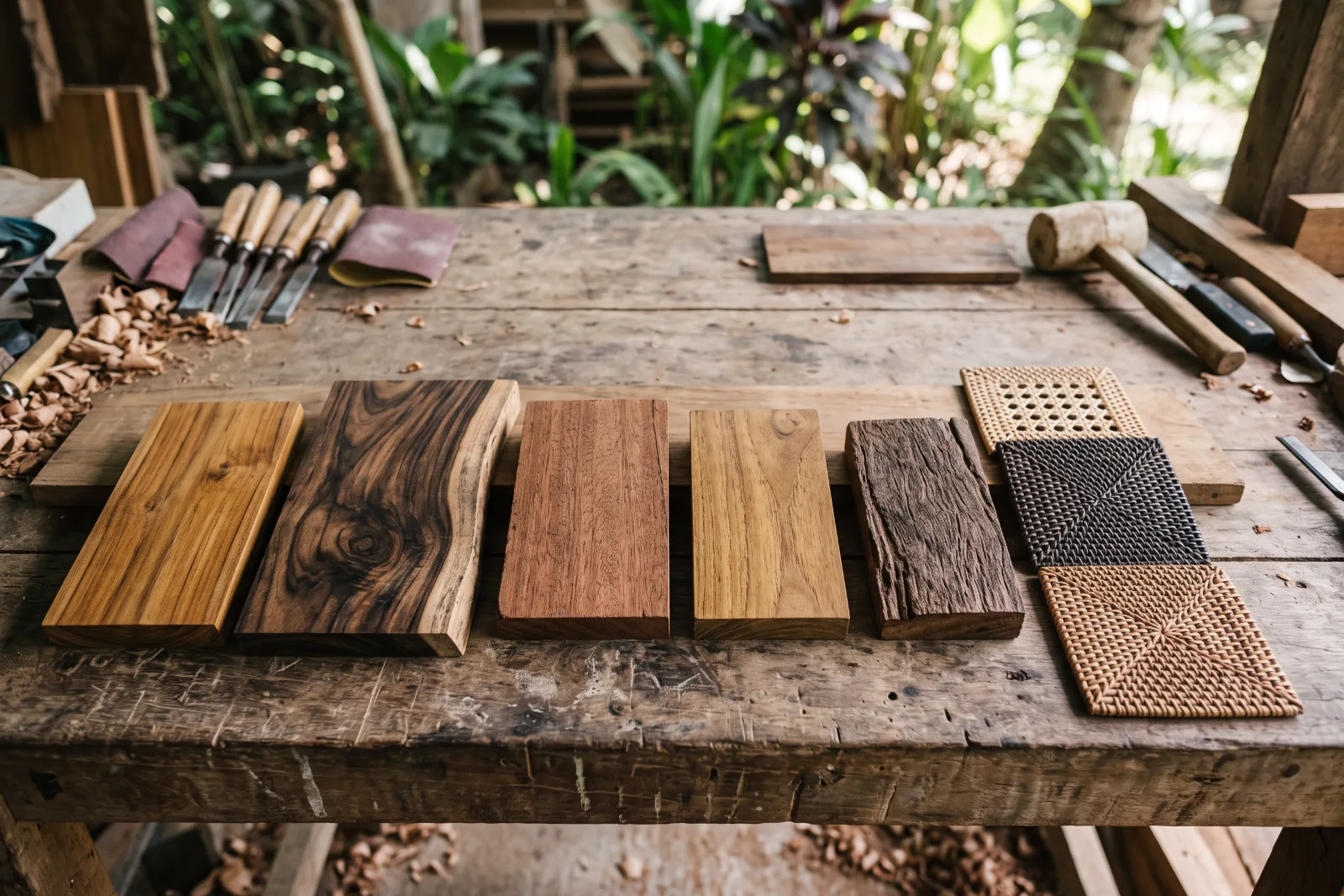
Teak (jati) is the gold standard: stable, naturally oily, resistant to water, rot and termites, and beautiful. Plantation teak is widely available in Bali; older recycled teak is prized for character.
Merbau is very hard and durable with a rich reddish-brown colour — excellent for doors, stairs and decking. Ulin (Borneo ironwood) is the toughest of all and ideal for decking, posts and shingles. Bengkirai is a durable, more economical choice for decking and outdoor structures.
Boards for cabinets and wardrobes
Marine-grade (WBP) plywood is the best board for kitchens, vanities and wardrobes in Bali. Its cross-laminated layers and waterproof glue resist swelling and hold screws well.
MDF can be used for painted doors in dry, air-conditioned rooms, but it must be sealed on all faces. Particle board (chipboard) should be avoided: once it absorbs moisture it swells and crumbles.
Finishes
HPL (high-pressure laminate) is tough, waterproof and wipe-clean — the most practical finish for kitchens and rentals. Two-pack (duco) paint gives a seamless look but needs careful application. Natural oils suit teak and outdoor timber; polyurethane gives a harder wearing surface indoors.
Hardware and details
Choose stainless steel or quality coated hardware near the coast, and soft-close hinges and runners rated for humidity. Seal every edge and cut-out, raise cabinets off wet floors and build in ventilation for wardrobes.
Protecting against termites
Treat all timber and boards with anti-termite preservative before assembly, keep wood off direct contact with soil and concrete where possible, leave inspection access and arrange a professional soil barrier for new buildings.